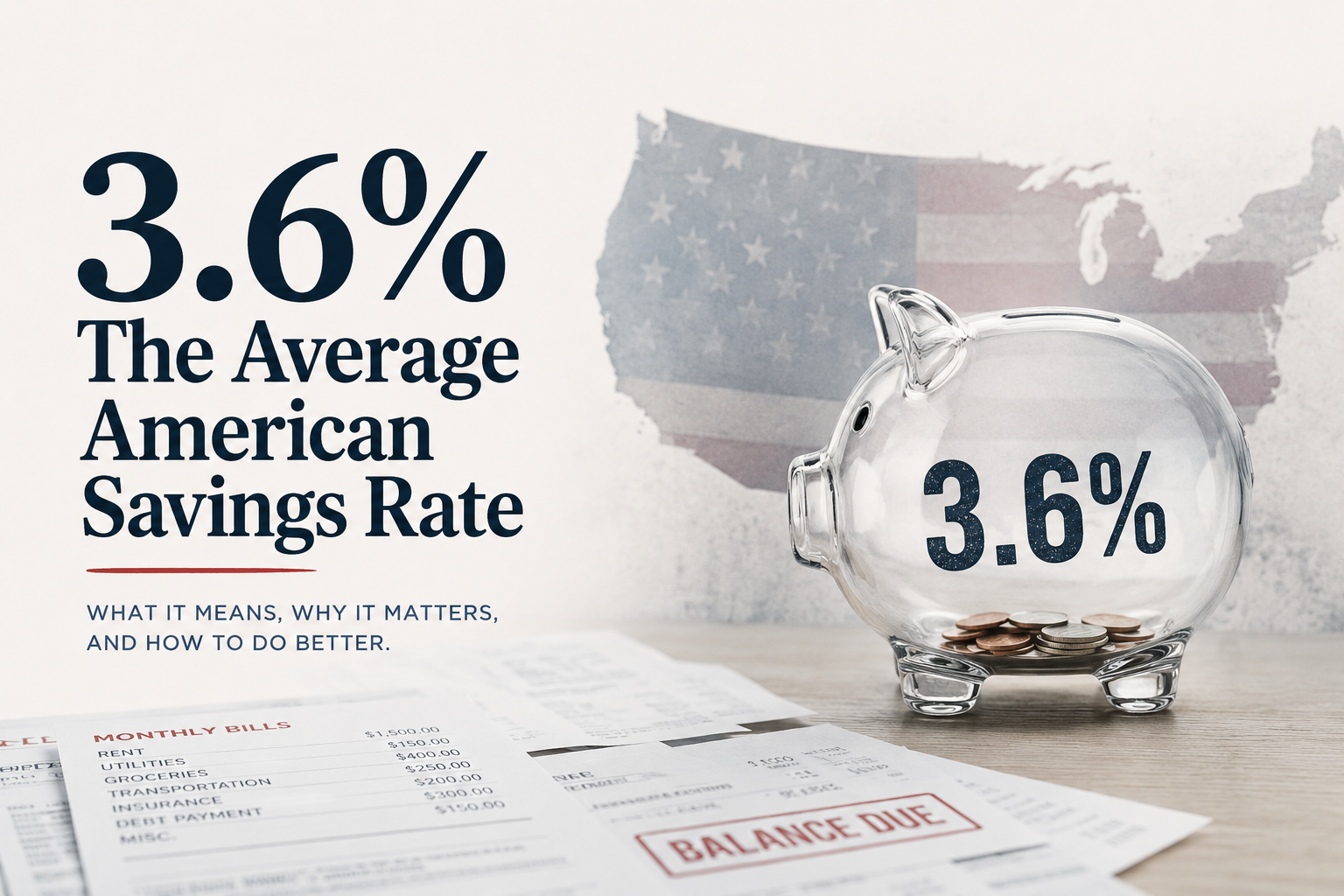
The 3.6% Wake-Up Call
The U.S. personal savings rate just dropped to 3.6% in March 2026, down from 4.0% the month before, and down from a pre-pandemic average of around 6.1%. Translation? Americans are saving less, feeling more stressed, and running thinner margins than they have in years.
But here's what nobody tells you: the problem isn't that people don't want to save. The problem is that the tools designed to help us save are quietly making things worse. Saving feels impossible when your budgeting app just shames you for overspending last month.
Why Traditional Budgeting Apps Fail
Most budgeting apps are designed like financial autopsies. They show you where you went wrong. They flash red when you overspend. They turn money management into a guilt trip. Is it any wonder most people abandon these apps within a few weeks of downloading them?
There's a name for this in behavioral finance: restriction framing. When every interaction with your money tool is about what you did wrong, opening the app starts to feel like opening a report card you don't want to read. So you stop opening it. And then you stop budgeting altogether. The cycle continues, the savings rate keeps dropping, and the apps keep blaming the user.
It's not the user. It's the design.
What Actually Works
The apps and habits that keep people engaged, and actually improve outcomes, do three things differently:
- They plan forward, not backward. Instead of reviewing last month's sins, they help you assign next month's money before you spend it. That shifts your brain from "what did I mess up?" to "what am I building?" This is the difference between a financial autopsy and a financial blueprint.
- They celebrate progress, not just flag problems. Positive reinforcement beats negative reinforcement every time. Seeing that you hit a micro-goal feels good. Feeling good makes you come back. Coming back is how habits form.
- They keep the scope manageable. You don't need a PhD in personal finance to use them. One concrete habit at a time. One win at a time. The apps that work meet you where you are, not where a Certified Financial Planner thinks you should be.
How Lucky Friday Was Built for Exactly This Problem
Lucky Friday is a cross-platform budgeting app (iOS and web) that was built from the ground up to address every failure mode of traditional budgeting tools. Here's what makes it different, and how each design decision connects back to the question of whether you actually save more.
1. Unlimited User-Defined Categorization
Most budgeting apps lock you into 15-20 predetermined categories. Groceries. Gas. Entertainment. Done. The problem? Your life doesn't fit in 20 boxes. Maybe you need a category for "daughter's gymnastics fees" or "dog vet emergency fund" or "side hustle reinvestment." When the app can't represent your actual life, you stop trusting it.
Lucky Friday lets you create unlimited custom categories, named whatever makes sense to you. This isn't a small thing. The research on behavior change is clear: people stick with systems that reflect their actual identity, not generic templates. When your categories sound like your life, the app stops feeling like a chore and starts feeling like a tool.
2. A Generous Permanent Free Tier
Lucky Friday has a real free tier, not a 7-day trial that converts to $14.99/month. People who are stressed about money should not have to pay to learn how to manage their money. Premium features exist for people who want more advanced functionality, but the core habit-building tools are free. Permanently.
3. Privacy-First Design
Here's something most budgeting apps quietly don't tell you: many of them feed your transaction data into AI models, sell anonymized insights to financial services partners, or use your spending patterns to target ads. Lucky Friday is deliberately privacy-first. No user financial data passes through AI models, and your information isn't a product being sold downstream.
This matters more than people realize. Trust is the foundation of any tool you're going to log into multiple times a week. If you suspect (correctly or not) that your data is being sold, you'll subconsciously pull back. Privacy-first design isn't just an ethical position. It's a usage driver.
4. Plaid Integration, Not Bank Scraping
Lucky Friday uses Plaid for bank connections, the same secure infrastructure used by Venmo, Robinhood, and most major fintech apps. You're never typing your bank password into a third-party app. Connection is secure, transactions sync automatically, and you control which accounts are linked.
5. Designed Around Goals, Not Just Spending
Most apps focus exclusively on tracking spending. Lucky Friday focuses on goals first, spending second. You set what you're saving for (emergency fund, vacation, down payment, new laptop) and the app helps you build toward it. Spending categorization is in service of those goals, not the point itself.
One Thing to Try This Week
Set one micro-savings goal. Just one. Maybe it's $20 toward an emergency fund. Maybe it's $10 toward a vacation. The amount doesn't matter. What matters is that you give it a name, set a deadline, and track it.
In Lucky Friday, you can create a custom category called "My First Buffer." Put $10 or $20 into it today. Next week, add another $10. By the end of the month, you'll have $40-80 set aside. That's not life-changing money, but it's a life-changing habit.
Why does this matter? Bankrate's 2026 Annual Emergency Savings Report found that only 47% of Americans have enough liquidity to cover a $1,000 emergency. A separate U.S. News survey put the gap even wider: 43% of Americans say they couldn't pay for a $1,000 surprise expense from savings at all. Small, automated savings is one of the most reliable ways to start closing that gap.
The Math of Pulling Yourself Above 3.6%
The U.S. personal savings rate is 3.6% of disposable income. The pre-pandemic average was 6.1%. Some financial planners recommend 20%. Let's run the actual numbers on what it takes to pull yourself above the national average.
If you earn $50,000 a year and take home roughly $40,000 after taxes, here's what different savings rates look like:
- 3.6% (national average): $1,440/year, or $120/month, or $27.69/week
- 6.1% (pre-pandemic average): $2,440/year, or $203/month, or $46.92/week
- 10% (financial planner baseline): $4,000/year, or $333/month, or $76.92/week
- 20% (FIRE-adjacent): $8,000/year, or $667/month, or $153.85/week
That gap between 3.6% and 6.1%, the average American versus the average pre-pandemic American, is about $19/week on a $50,000 salary. Roughly the cost of one takeout lunch. The point isn't to skip lunch. The point is that pulling yourself above the national average isn't an astronomical lift. It's a habit lift.
The Bigger Picture
Better money habits aren't built in a day. They're built in tiny, repeated decisions that compound over months and years. The person who saves $10 a week will have $520 by the end of the year. The person who tracks their spending for 30 days will start to see patterns they never noticed before. The person who names their goals will feel more connected to their money.
That financial stress is real and widespread. The Allianz Life 2026 New Year's Resolutions Study found 48% of Americans feel more financially stressed heading into 2026 than they did a year earlier. The American Distress Index, which tracks five dimensions of household financial pressure, currently reads in the Elevated zone nationally.
This is the world Lucky Friday was built for. A cross-platform budgeting app designed around the idea that personal finance should feel human, not corporate. No jargon. No shame spirals. Just a clean, simple way to see your money, name your goals, and build habits that stick.
The 3.6% savings rate is a wake-up call. But it doesn't have to be your wake-up call. You can start building your buffer today.
Frequently Asked Questions
Why do most budgeting apps fail?
Most budgeting apps fail because they use restriction framing. They focus on what you did wrong, flash warnings when you overspend, and treat money management as a punishment. This creates negative emotional associations with the app, leading users to stop opening it within weeks. Apps that succeed do the opposite: they plan forward, celebrate progress, and keep the scope manageable.
How much should I save each month?
Financial planners commonly recommend 20% of after-tax income, but the pre-pandemic U.S. average was around 6.1%. The current national average is 3.6%, and any consistent savings habit is better than none. Start with whatever amount you can sustain. $10/week beats $200 one time and zero for the next six months.
What's the difference between forward and backward budgeting?
Backward budgeting reviews what you spent after the fact. Forward budgeting assigns money to categories before you spend it. Forward budgeting is more effective because it shifts your brain from regret to intention. You're building a plan rather than auditing a mistake.
Is Lucky Friday really free?
Yes. Lucky Friday has a permanent free tier with the core budgeting and goal-tracking tools. Premium features exist for users who want more, but you don't need to pay to learn how to manage your money.
Is my financial data safe in Lucky Friday?
Lucky Friday is privacy-first by design. Your financial data is not passed to AI models, and bank connections use Plaid, the same secure infrastructure used by Venmo, Robinhood, and most major fintech apps.
How do I start an emergency fund with no savings?
Start small. Create a dedicated category called something specific like "My First Buffer" and put $10 or $20 into it this week. Add to it weekly. By month two, you'll have $80-160. By month six, you'll have a real cushion. The goal isn't to fund a $10,000 emergency fund overnight. It's to build the habit of saving anything at all.
Sources
- U.S. Bureau of Economic Analysis, Personal Income and Outlays, March 2026 (3.6% personal saving rate)
- U.S. Bureau of Economic Analysis, Personal Income and Outlays, February 2026 (4.0% personal saving rate)
- Bankrate, 2026 Annual Emergency Savings Report (47% can cover a $1,000 emergency)
- U.S. News, 2026 Financial Wellness Survey (43% can't cover a $1,000 emergency from savings)
- Allianz Life, 2026 New Year's Resolutions Study (48% more financially stressed)
- American Default, American Distress Index (national distress level)