POST BODY:
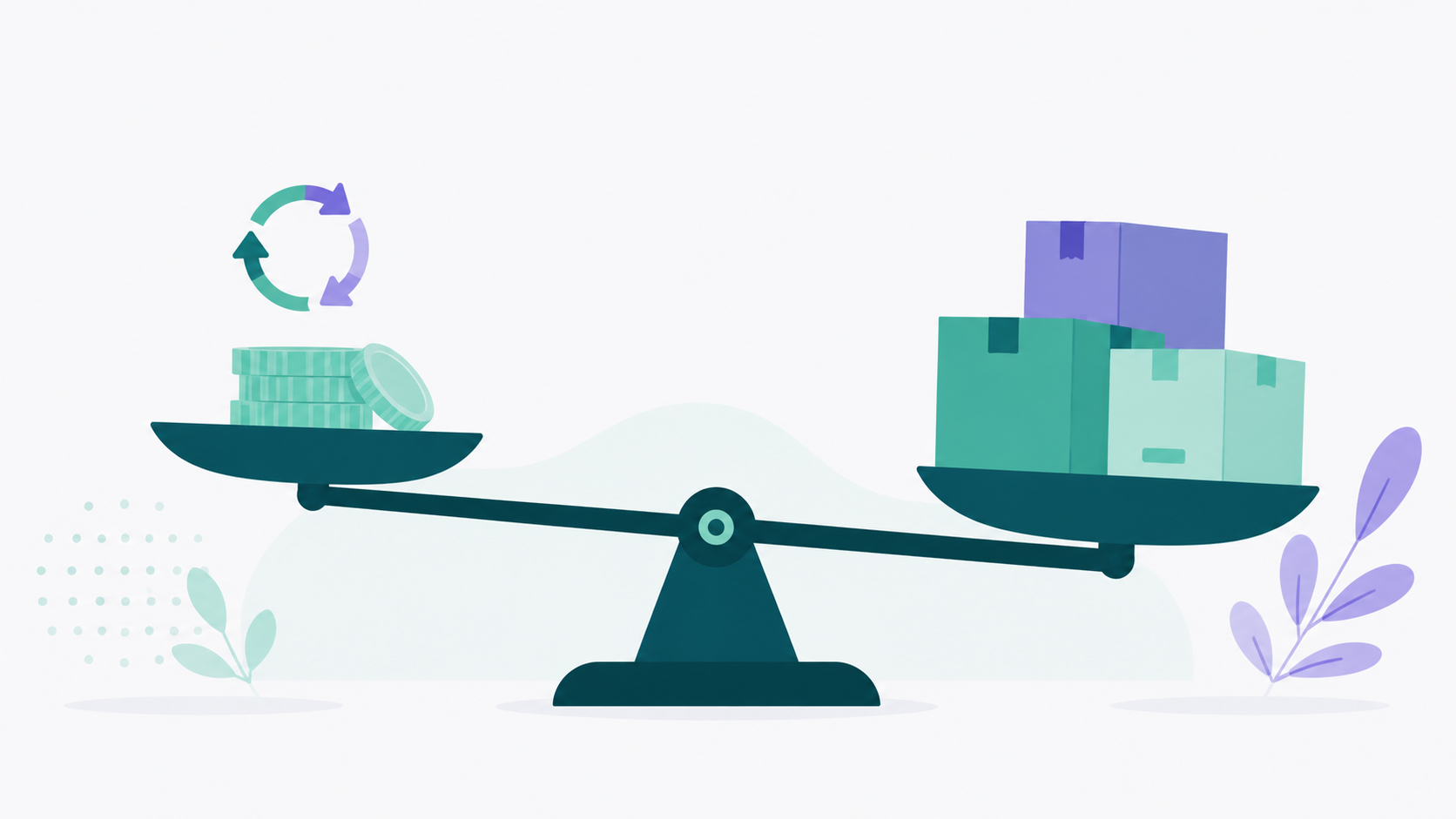
Amazon Prime costs $139 a year, and non-Prime shoppers already get free standard shipping on orders over $35. So Prime only saves you money on shipping if you place roughly 20 small orders a year that you couldn't have bundled into larger ones. The bundled benefits like video and music can shift that math, but only if you'd have paid for them separately.
Here's the harder question, and the one most break-even calculators skip. Prime members spend about twice as much on Amazon annually as non-members, and the membership was explicitly designed to make you hesitate less before ordering. A subscription that saves you $6 on shipping while adding $400 to your annual spending isn't saving you anything.
How much does Amazon Prime cost in 2026?
Standard Prime runs $14.99 a month or $139 a year in the U.S. Paying annually saves about $41 compared with monthly billing, which works out to roughly $11.58 a month.
Two discounted tiers exist and a lot of people who qualify don't know about them. Prime for Young Adults, which covers ages 18 to 24 and higher education students, costs $7.49 a month or $69 a year after a six month free trial. Prime Access, for people receiving qualifying government assistance like SNAP, EBT, or Medicaid, costs $6.99 a month and includes the same benefits as standard Prime. You verify eligibility once and re-verify annually.
The price history is worth knowing too, because it tells you where this is heading. Prime launched at $79 a year in 2005, went to $99 in 2014, $119 in 2018, and $139 in February 2022. Add ons have expanded separately: Prime Video now shows ads by default, and the ad free upgrade costs an additional $4.99 a month as of April 2026, up from $2.99. That's another $60 a year if you're paying it, which pushes a $139 membership close to $200.
One more change that caught people out. The Prime Invitee Program ended October 1, 2025, so you can no longer share shipping benefits with someone at a different address. Sharing now runs through Amazon Family and requires the same household address.
What's the break-even math on Amazon Prime?
Prime breaks even on shipping alone at roughly 20 small orders a year, or about two a month. That's because non-Prime shoppers get free standard shipping on eligible orders of $35 or more, so the only orders that actually cost you anything are the ones below that threshold.
Run the numbers. Standard shipping on a sub-$35 order typically runs somewhere around $6 to $9 depending on the item. Divide $139 by $7 and you get about 20 orders. If you place two small, non-consolidatable orders a month and never bundle anything, Prime pays for itself on shipping. If you place one order a month and it's usually over $35 anyway, you're paying $139 for speed, not for shipping.
That threshold matters more than people realize. Amazon raised the non-Prime minimum from $25 to $35 in late 2023, and books still qualify at $25. So the workaround is straightforward: batch your orders. Keep a running list, order once every two weeks, and cross $35 almost every time.
Run your own number in four steps
Pull the actual data instead of estimating, because estimates on this are reliably wrong in the same direction.
First, download your Amazon order history report from your account, which gives you every order for the past year with dates and totals. Second, count how many orders came in under $35. Third, multiply that count by about $7 to get your real shipping savings. Fourth, add the value of any bundled benefit you'd genuinely have paid for otherwise, at what you'd actually have paid rather than list price.
If that total beats $139, Prime is earning its keep on the direct math. Most people find it's closer than they expected, and a fair number find it doesn't clear the bar at all once they stop counting Prime Video as $150 of value they were never going to buy.
Do Prime members actually spend more?
Yes, substantially. Consumer Intelligence Research Partners data puts average annual Amazon spending for Prime members at roughly $1,170, compared with about $570 for non-Prime shoppers. Other estimates run higher, in the $1,400 to $1,500 range, but every source lands on the same ratio: Prime members spend about twice as much.
Now for the honest caveat, because this is where a lot of personal finance writing gets sloppy. That gap is correlation, not proof of causation. People who already shop on Amazon constantly are exactly the people who sign up for Prime, so some of the difference is just self selection. You can't read $600 of extra annual spending as $600 that Prime made you spend.
But there's a real mechanism underneath, and it isn't subtle. Prime was designed from the start to remove the per shipment calculation that made people pause before ordering. Replace a variable shipping cost with a flat annual fee, and every individual purchase starts to feel like it ships for free. That pause you used to take was doing something. It was the moment when you decided whether a $12 item was worth $19 all in.
Then there's the sunk cost effect, which behavioral economists have documented for decades. You paid $139 up front, so you want to get your money's worth, which means shopping more to justify the fee you already paid. That's backwards as a matter of logic, since the $139 is gone either way. It's also extremely common. Renewal rates for Prime run around 93 percent after the first year, and part of that stickiness is that people feel they've invested in it.
So the useful reframe is this. Don't ask whether Prime saves you money on shipping. Ask whether your total Amazon spending went up after you joined, and whether the extra spending bought you things you'd have chosen deliberately.
When is Prime genuinely worth it?
It's worth it when you're already ordering frequently for reasons that have nothing to do with the membership, and when you'd have paid for at least one bundled service anyway.
Prime tends to make sense if you order from Amazon two or more times a month for genuine household needs, if you live somewhere with limited retail options where delivery replaces a 40 minute drive, if you have a Subscribe & Save routine for staples like paper goods or pet food, if you qualify for the $6.99 Prime Access rate, or if you'd otherwise pay for a separate streaming subscription and Prime Video actually replaces it.
Prime tends not to make sense if you order once a month or less, if your orders are usually over $35 anyway, if you don't watch Prime Video or use Amazon Music, if you're paying monthly rather than annually and losing $41 a year to that, or if you signed up during a trial and haven't evaluated it since. That last one covers a lot of people. A membership you never re-examined isn't a decision, it's a default.
How do you find out what you actually spend on Amazon?
Give Amazon its own budget category and watch it for 60 days. Most people significantly underestimate their Amazon total because the purchases are small, frequent, and spread across categories that don't feel related.
Here's the problem with lumping it all together, though. A single "Amazon" category tells you that you spent $340 last month without telling you whether that was groceries, a car part, and school supplies, or eleven impulse buys. Both totals look identical and mean completely different things.
Subcategories fix that. Lucky Friday lets you create unlimited custom categories and subcategories, so you can build an Amazon parent with subcategories underneath for household, groceries, gifts, and whatever else applies, and then read both the total and the breakdown. That's on the permanently free tier, with no cap and no credit card required. Category rules help too: set one rule for Amazon transactions so they file themselves instead of requiring you to sort them by hand every week.
Then compare month to month rather than against a budget you set once. Direction is what matters here, and if you're curious about spotting that kind of drift early, our piece on why most budgeting apps never move your savings rate covers why tracking alone often doesn't change the number.
How can you cut the cost if you're keeping Prime?
Several of these take under five minutes and none of them require giving up the membership.
Switch from monthly to annual billing if you're staying a full year, since that's about $41 back. Check whether you qualify for Prime Access at $6.99 a month, which is a genuine saving of over $70 a year and is one of the most underused discounts Amazon offers. If you're 18 to 24 or a student, the $69 annual rate is half price and starts with a six month trial.
Cancel the ad free video upgrade if you're paying $4.99 a month for it and don't strongly care about ads, which is $60 a year. Use Amazon Family to share benefits with people at your address, since outside-household sharing ended in 2025. Use Subscribe & Save for staples you buy repeatedly, which layers a discount on top of the membership you're already paying for.
And set a calendar reminder for the week before your renewal date. A subscription you actively re-approve once a year is a different financial product than one that renews invisibly. If you find you've been paying for something you barely use, redirecting that $139 into a starter cushion is a reasonable next move, and our guide to starting an emergency fund when you're already behind covers how to build that first buffer without waiting for a windfall.
Common Questions About Amazon Prime and Whether It Saves Money
How many Amazon orders do you need for Prime to be worth it?
Roughly 20 small orders a year on shipping value alone, since non-Prime shoppers get free standard shipping at $35 and up. Below that threshold, shipping usually costs around $6 to $9, so about two small orders a month gets you to break even on $139. Bundled benefits shift the math only if you'd have paid for them separately.
Does having Amazon Prime make you spend more?
Prime members spend about twice as much on Amazon annually as non-members, roughly $1,170 versus $570 by CIRP's estimate. Some of that gap is self selection, since frequent shoppers are the ones who join. The membership also removes the per order shipping calculation that used to create a pause before buying, which is exactly what it was designed to do.
Is Amazon Prime worth it if you only want Prime Video?
Usually not at the full membership price, since a standalone Prime Video subscription costs less than Prime and Prime Video now includes ads by default. Removing those ads costs an additional $4.99 a month on top of your membership as of April 2026. Compare the standalone video price against $139 before assuming the bundle wins.
Can I get Amazon Prime cheaper?
Yes, if you qualify for one of the discounted tiers. Prime Access costs $6.99 a month for people receiving SNAP, EBT, Medicaid, or similar assistance, and Prime for Young Adults runs $7.49 a month or $69 a year for ages 18 to 24 and students. Switching from monthly to annual billing saves about $41 regardless of tier.
What's the best way to track Amazon spending in a budget?
Download your Amazon order history report to see the real annual total, then create a dedicated category with subcategories for the different kinds of purchases so you can tell household staples from impulse buys. A single lumped Amazon category hides the distinction that actually matters. Setting a rule so those transactions categorize automatically keeps the tracking from becoming a chore.
Sources
Amazon. "Amazon Prime membership plans and pricing, U.S." Pricing as of August 2026, summarized at https://www.itechguides.com/amazon-prime-membership-plans-and-prices-u-s-2026-explained/
DealNews. "How Much Is Amazon Prime? Benefits and Membership Details." 2026. https://www.dealnews.com/features/amazon-prime/cost/
CNBC. "Amazon raises free shipping minimum to $35 for some customers who don't have Prime." August 28, 2023. https://www.cnbc.com/2023/08/28/amazon-hikes-free-shipping-minimum-to-35-for-some-users-without-prime.html
Consumer Intelligence Research Partners, Prime versus non-Prime annual spending data, summarized at https://capitaloneshopping.com/research/amazon-prime-statistics/
Business Stats. "Amazon Prime Statistics and Facts 2026," including U.S. annual pricing history and Prime spending ratio. https://businesstats.com/amazon-prime/